Table tennis injuries: where they show up and how to prevent them
Table tennis has little physical contact, but repeated strokes and quick changes of direction can overload the shoulder, elbow, wrist, lower back, knees and ankles. A warm-up, technique that uses the whole body, gradual increases in training, strength work, rest and good shoes help prevent problems. Pain that persists should be checked by a health professional.
In this article
Table tennis is a non-contact sport that people play at every age. That does not mean it is easy on the body. One session has hundreds of repeated strokes, trunk rotations and quick moves to the side, and that is where overuse aches can show up.
This article gives general information to help with prevention. It is not a diagnosis or a treatment plan: if you are in pain, see a doctor or physical therapist, ideally one with sports experience.
Where overload tends to show up
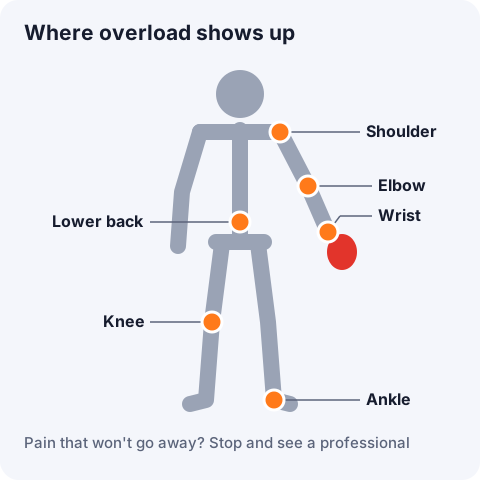
| Area | Common situation in the game | What usually helps |
|---|---|---|
| Shoulder | Lots of loops hit with the arm only, no trunk rotation | Strokes that start in the legs and hips, shoulder strengthening |
| Elbow | Repeated strokes with a tense forearm, grip too tight | Relaxed grip, technique, gradual increase in volume |
| Wrist | Overusing the wrist on serves, flicks and loops | Wrist as a finishing touch, not the engine of the stroke |
| Lower back | Hunched posture and repeated trunk rotation | Bend your knees instead of your back, strengthen your core |
| Knee | Constant squatting, braking and changing direction | Leg strength, proper shoes |
| Ankle | Stepping on a stray ball, slippery floor | Pick up balls, dry floor, shoes with good grip |
Pain on the outside of the elbow, often called "tennis elbow", is well known in racket sports, and ping pong players search for "ping pong elbow" too. Only a professional can tell whether that is what you have.
How to prevent table tennis injuries
Warm up before you play
Starting a session by hitting hard with a cold body is asking for trouble. A 10 to 15 minute warm-up with light activity, mobility and a progressive rally gets muscles and joints ready. A full routine is in warm-up and fitness.
Use your whole body
Good technique is also prevention. On the forehand and the loop, power comes from your legs and the rotation of your hips and trunk, and the arm finishes the movement. Hitting with the arm alone loads the shoulder and elbow. If you are not sure about your technique, ask a coach to take a look.
Build up gradually
Many aches show up when training volume jumps suddenly: coming back from a break and playing every day, entering a whole weekend tournament without preparation, starting intense multiball all at once. Increase duration and intensity step by step.
Strengthen what the game demands
Strong legs, core and shoulders handle repetition better. Simple exercises twice a week already help. If you have a health condition, ask a professional for guidance before starting.
Respect rest
Your body adapts during recovery. Training tired hurts your technique, and poor technique puts more load on your joints. Build rest days into your week.
Take care of your space and gear
- Shoes: use shoes with good grip and lateral support. See table tennis shoes and clothing.
- Balls on the floor: pick them up between sets.
- Floor: dry and clear around the table.
- Grip: hold the paddle without squeezing. See table tennis grip.
Stretch and cool down after
After practice, a cool-down with gentle stretches helps you relax. Options are in stretching for table tennis.
Warning signs: stop and get help
Stop playing and see a health professional if you notice:
- pain that gets worse during play or changes how you move;
- pain that does not improve after a few days of rest;
- swelling, redness or warmth in a joint;
- tingling, numbness or loss of strength;
- sudden sharp pain, like with a sprain.
Playing through pain usually makes things worse and delays your return. Do not self-medicate just to keep playing.
Coming back after an injury
Follow the advice of whoever is treating you. Usually the return is gradual: easy rallies first, then more intense drills, and matches and tournaments last. If the pain comes back, step back a stage and talk to your professional again.
Frequently asked questions
What are the most common table tennis injuries?
Complaints tend to show up in areas that take repeated movements or quick changes of direction, like the shoulder, elbow, wrist, lower back, knees and ankles. Only a professional can diagnose an injury.
What should I do about shoulder pain after playing table tennis?
Stop pushing through it and see a doctor or physical therapist. Arm-only technique often adds to the load, so it is also worth reviewing your stroke with a coach.
Can ping pong cause elbow pain?
Repeated strokes with a tense forearm can overload the elbow, as in other racket sports. If pain shows up, see a professional and do not keep playing through it.
How do you prevent table tennis injuries?
Warm up, use your whole body in your strokes, build up training gradually, strengthen your legs, core and shoulders, rest, and wear shoes with good grip.