How to clean and care for your table tennis rubber
Clean the rubber after every session with a table tennis rubber cleaner or a slightly damp sponge with plain water, using gentle strokes. Dab it dry, put protective film on inverted rubbers and keep the paddle in a case away from sun and heat. Avoid alcohol, household cleaners and rough paper.
In this article
Rubber takes the most punishment of any part of your paddle. Dust, sweat and ball residue build up on the surface and steal grip. Dirty rubber can lose spin within weeks; well-kept rubber lasts much longer.
The good news: cleaning takes under a minute. Here is how to clean a ping pong paddle the right way.
Why clean the rubber
Spin comes from friction between ball and rubber. Any layer of dust or grease between them cuts that friction. You notice it when:
- The ball slides off on backspin serves.
- Your loops come out flatter, with less spin.
- The rubber looks gray or dull.
Often the rubber is not worn out, just dirty.
How to clean ping pong paddle rubber, step by step
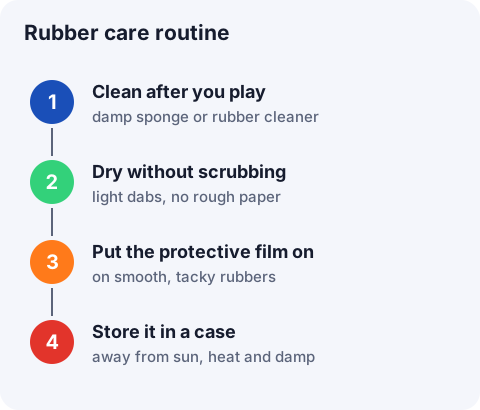
- After playing, remove loose dust by blowing on it or with light taps of a clean hand.
- Apply a table tennis rubber cleaner, or lightly dampen a soft sponge with plain water.
- Wipe gently from the center out to the edges, without scrubbing hard.
- Dab it dry with a soft, lint-free cloth.
- Let the surface dry, then put the protective film on (for inverted rubber).
- Put the paddle in its case.
What to use and what to avoid
| Use | Avoid |
|---|---|
| Table tennis rubber cleaner | Alcohol and solvents |
| Plain water on a soft sponge | Strong soap and household cleaners |
| Microfiber cloth or soft sponge | Rough paper towels and napkins |
| Non-adhesive or light-adhesive protective film | Leaving the paddle in the sun or in a car |
| Hard or padded case | Tossing the paddle loose in a bag |
Plenty of players use just water and it works fine. If you use a cleaner, pick one sold for table tennis and follow the label.
Care by rubber type
Inverted rubber
This needs cleaning most, because spin depends on its smooth surface. Clean after every session and use protective film. Tacky rubbers (Chinese style) are often cleaned with water only so you do not strip the tack; use film without strong adhesive.
Short pips and long pips
Dirt collects between the pimples. Wipe carefully with a damp sponge or a very soft brush, along the rows of pips. Skip adhesive film, which can pull pimples off when you peel it away.
Blade and handle
The handle collects sweat. Wipe it now and then with a barely damp cloth and dry it right away. Do not soak the blade: it is made of glued plies and can delaminate or warp.
How to store your paddle
- Always use a case. It shields the rubber from light, dust and edge knocks.
- Keep it away from heat. Sun, car trunks and heaters dry out rubber and can loosen glue.
- Keep it dry. High humidity can affect the wood and the glue.
- Nothing on top. Heavy objects can dent the sponge.
During play
- Avoid touching the rubber surface: skin oil cuts grip.
- Keep the paddle from hitting the table. A chipped edge is one of the most common reasons to replace rubber.
- Between points, use your towel on your face and hands, not to scrub the rubber.
Even with good care, rubber wears out. When cleaning no longer brings the grip back, see when to replace your rubber. If you are putting on a new one, follow how to glue table tennis rubber.
Frequently asked questions
What is the best way to clean a ping pong paddle?
A soft sponge lightly dampened with water, wiped gently. Then dab it dry with a soft cloth and put the protective film on.
Can I clean table tennis rubber with alcohol?
No. Alcohol dries the surface and can reduce grip and shorten the life of the rubber.
How often should you clean a ping pong paddle?
Ideally after every practice session or match. It takes less than a minute.
What does protective film do?
It shields inverted rubber from dust, light and air between sessions, which helps it keep grip longer.
Can I rinse my paddle under the tap?
No. Too much water can loosen the glue and damage the blade. Use only a slightly damp sponge.